SEI
Sei exists as a next-generation blockchain that concentrates on delivering top performance for decentralized financial services and trading. After its 2022 debut, Sei uses innovative construction methods to solve traditional blockchain network problems with poor speed and high transaction inefficiency. Sei combines Cosmos SDK with an optimized Ethereum Virtual Machine to form the developer-friendly Ethereum ecosystem with fast Solana-level transactions.
The SEI token takes charge of transactions with its payment role while backing the network with stake holdings alongside governing actions. The network stands out among Layer 1s because it combines twin-turbo consensus, sub-second block confirmation, and built-in order book functionality to suit DEXs, NFT projects, and Web3 gaming applications specifically.
How Sei Works: Architecture and Performance
The proof-of-stake chain Sei focuses on fast and secure networks with fair treatment for all participants. The twin-turbo consensus engine on Sei enables it to process transactions in only 400 milliseconds. SeiDB runs as a special database engine made for handling high traffic without impacting performance.
Sei’s parallelized EVM is a key differentiator, as it enables smart contracts to be executed simultaneously. This is a massive improvement over Ethereum’s linear execution model in terms of throughput and performance. This in practice allows Sei to process thousands of transactions per second (TPS) without sacrificing reliability or decentralization.
Moreover, Sei also has a native order-matching engine in its protocol. This engine is a game changer for decentralized exchanges, allowing for fast, efficient, and fair trade execution. Unlike traditional blockchains, Sei has built-in functionality that reduces latency and gas fees and mitigates risks such as front-running by implementing order books at the application layer.
Sei vs. Other Blockchains
Sei creates a unique platform structure that supports DeFi applications differently from other major blockchains. Bitcoin insists on strong security and distributed systems while Ethereum lets you run various smart contracts but Sei is built for optimal speed. Developers of Ethereum apps will find Sei easy to use because its software connects with both Ethereum and Cosmos networks.
While Sei provides a similar fast and scalable experience as Solana, it provides a more Ethereum-friendly developer environment. Whereas privacy-focused blockchains like Monero tend to appeal to the anonymity-conscious users, Sei’s transparent and regulation-friendly architecture is perfect for institutional-grade DeFi projects.
With this strategic focus, Sei finds itself among the ranks of other high-performance blockchains such as Avalanche and Arbitrum, but with a value proposition that is unique to Sei: native trading infrastructure, sub-second finality, and cross-chain compatibility.
Sei’s Technology Stack
Sei’s strength is built on its innovative technology stack:
- Parallelized EVM: Multiple transactions and contracts can be executed at once, making the network more efficient and less congested.
- Twin-Turbo Consensus: Fast finality with 400ms block times, allowing for rapid trading and real-time DeFi applications.
- Custom storage solution optimized for fast reads and writes that improves overall performance.
- ABCI++ Integration: An advanced module in the Cosmos SDK that helps in the processing of transactions and decreases latency.
- Integrated at the base layer for native support of DEXs, Order Matching Engine.
- Prevention of Front Running: It guarantees fair ordering of transactions and protects users from manipulative tactics.
Combined, these features make up a blockchain platform that can provide the performance and user experience that modern DeFi platforms and Web3 apps require.
Sei as an Investment
Sei is an emerging blockchain that presents interesting investment potential. Its backing from Circle Ventures and Coinbase Ventures is a sign of strong institutional confidence. SEI token is used for staking, paying fees, and governance and is gaining popularity among developers and investors.
Like all cryptocurrencies, Sei has inherent risks.
- SEI’s price is subject to the same market volatility as the broader crypto market.
- Sei was launched in 2022 and has a limited operational history, meaning that there is some uncertainty.
- Regulatory Risk: DeFi is becoming increasingly regulated globally, and Sei’s compliance posture will be put to the test.
SEI price predictions for 2025 are modest gains to significant growth, depending on the overall DeFi adoption and Sei’s ability to keep the developer interest and the ecosystem expansion.
How to Buy and Store SEI
Buying SEI is relatively straightforward:
- Binance, Coinbase, and Kraken are some of the platforms where you can find SEI listed
- Sign Up and complete KYC (Know Your Customer) Verification: Create an account
- Add fiat (USD, EUR) or crypto (BTC, ETH) to your exchange wallet
- To buy SEI, use the exchange’s trading interface
- Transfer to Wallet: Reduce custodial risk by moving SEI to a secure wallet
Wallet options include:
- Hardware Wallets: Ledger and Trezor offer offline storage and high security
- Active traders can use MetaMask and Trust Wallet, which are accessible software wallets. Convenient but less secure as they are centralized
2FA, storing recovery phrases offline, keeping your software up to date, and being on the lookout for phishing attacks are all security best practices.
Use Cases and Ecosystem Adoption
A wide range of use cases are supported by Sei’s infrastructure.
- Sei’s built-in order book powers platforms like Dragonswap with low-latency trading.
- Sei is well suited for high-volume NFT platforms such as NFT marketplaces due to scalability.
- Sei’s fast finality is great for GameFi & Web3 Gaming as it allows for real-time gameplay and financial interactions.
- Cosmos SDK Integration: Cross-chain transfers are made possible.
While Sei’s adoption is still growing, the number of dApps and developers entering its ecosystem is steadily increasing due to its performance-oriented design and low transaction costs.
Regulatory Considerations
Regulatory scrutiny of crypto projects remains on the rise as of 2025. Although Sei is not a privacy coin, it could still feel pressure as it is a DeFi-focused project. Platforms built on Sei may be required to comply with anti-money laundering (AML) and know your customer (KYC) standards.
Sei and its ecosystem may be influenced by the EU’s MiCA regulation and other similar frameworks in other regions in the coming years. Sei’s transparent architecture and legitimate use cases may help it to survive regulatory waters more easily than anonymous or opaque blockchain projects.
Future Outlook
Sei’s long-term success depends on its ability to deliver on its technical promises and bring in a strong developer community. As DeFi and Web3 applications continue to develop, Sei’s high-performance and low-latency infrastructure is expected to be in high demand.
Key growth drivers include:
- The demand for scalable DeFi platforms is rising.
- Using Cosmos to expand cross-chain applications.
- Ongoing VC support and ecosystem funding.
- Continuous upgrades to the protocol, including better consensus and smart contract support.
Nevertheless, Sei must compete with other high-performance chains such as Solana, Avalanche and Sui, and must continue to innovate and be adopted in order to survive and thrive.
Conclusion
Sei is a bold step in blockchain infrastructure evolution. It has fast consensus, parallelized EVM, Cosmos interoperability and built-in trading infrastructure, making it perfect for next-gen DeFi, NFTs and Web3 gaming. However, as a pre-product company with a number of regulatory hurdles to overcome, Sei is not without its challenges.
Sei is a forward-looking opportunity for those looking for exposure to a high-performance, developer-friendly blockchain that is focused on decentralized trading and financial applications.
Frequently Asked Questions
What is Sei (SEI)?
The blockchain platform named Sei was constructed to solve the performance needs of Web3 gaming apps along with DeFi and NFT ventures. The launch in 2022 joined Cosmos SDK technology with optimized Ethereum capabilities to execute transactions quickly and confirm results almost instantly. People use SEI tokens to participate in staking and governance as well as pay fees when transacting on the network. The chain structure has built-in order book operations which general-purpose blockchains usually do not provide.
How does Sei achieve sub-second block finality?
Sei runs fast transactions through its Twin-Turbo Consensus setup along with its SeiDB database design. The network can complete block processing three times faster than other systems at exactly 400 milliseconds. The ability to process smart contracts in parallel with sub-second block finality makes Sei an effective blockchain for quick trading and gaming platforms. The system delivers fast and reliable results while maintaining distributed systems.
What tasks does the SEI token perform across our network?
SEI serves as the native utility token of the Sei blockchain. Users pay network fees with SEI while preserving the network security and helping determine its future direction through governance participation. Users who stake SEI coins help protect the network and get rewarded for their efforts. SEI token assists both decentralised exchanges and other applications within the Sei ecosystem by performing its main responsibilities.
What distinguishes Sei from Ethereum and Solana?
Sei meets the best features of both worlds by enabling developers to work with Ethereum-style tools yet handle transactions faster than Solana. Sei performs multiple EVM computations at once while Ethereum handles these steps one after another. Sei includes built-in order book technology but neither Ethereum nor Solana provide this feature in their base protocol design.
What makes Sei ideal for DeFi and trading platforms?
The network was created to serve trading and financial businesses. Sei offers an order matching system with fast operations that defends against front-running and helps DEXs run trading platforms and perpetual exchanges at lower risks. Sei includes pre-installed order book features directly on the platform to execute trades instantly while remaining fair to all users.
Is Sei EVM-compatible?
The platform contains a Solidity-based smart contract environment that is EVM-compatible. Developers who use the Ethereum Virtual Machine or other chains with the same interface can transfer their applications to Sei without updating their programming. The platform strengthens EVM performance by running multiple tasks simultaneously and establishing faster finalization.
What platforms offer SEI tokens for purchase and market trades?
Customers can obtain SEI from major crypto exchanges including Binance, Coinbase, and Kraken. Users can start buying SEI after they create their account, verify their identity, add funds to the wallet and then place spot or market trades on the platform. You should move your SEI tokens from the purchasing wallet into either hardware or reliable software wallets for superior defense.
What wallets support SEI tokens?
SEI tokens exist in both physical Ledger and Trezor wallets and digital wallet products MetaMask (with custom RPC) and Trust Wallet. The Cosmos SDK base allows Keplr Wallet and other International Blockchain Consortium-compatible wallets to offer support for this project. Users need to enable two-factor authentication and store recovery phrases physically alongside updating their wallet's software regularly.
What types of Web3 platforms need Sei the most?
Sei enables developers to build different types of Web3 applications including DEXs and NFT marketplaces along with allowing GameFi projects to match game events in real time.
- DEXs like Dragonswap for low-latency, high-frequency trading
- Marketplaces dedicated to selling NFTs that need instant transaction processing
- GameFi systems that need instant gameplay and financial transactions
- Cross-chain applications via the Cosmos IBC framework
The fast performance of Sei's platform enables various Web3 applications to deliver better results.
What direction does Sei plan to take over the next few years?
Sei needs to grow its developer base while expanding its platforms and staying ahead in technology to succeed. The platform benefits from investment capital provided by VC firms like Coinbase Ventures and Circle which keep its development funded. Upcoming technical advances and network connections combined with new government rules will push Sei to new growth levels. To stay competitive as an L1 chain Sei will need to defend its position against chains like Solana, Avalanche and Arbitrum.
Latest News in SEI
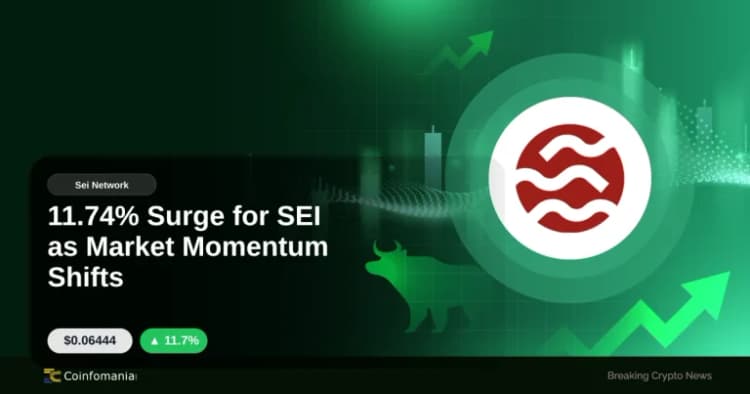
11.74% Surge for SEI as Market Momentum Shifts
SEI has surged 11.74% in the last hour, hitting $0.06444. This movement reflects changing market conditions.

Mikaeel
Author
SEI’s Supply Tsunami Crushes $1 Recovery Hopes

Triparna Baishnab
Author
SEI Stablecoin Growth Signals a Strong Finish to the Year

Vandit Grover
Author
SEI Holds Market Attention Even After a Sharp Monthly Pullback
Vandit Grover
Author
Sei Gaming Explodes in Q3 as Daily Active Addresses Smash New Records
Triparna Baishnab
Author