Max Drawdown in Crypto Prop Trading: What It Really Means
Learn how max drawdown affects crypto prop trading accounts and discover practical ways to manage static and trailing drawdown limits, risk, and position sizing.
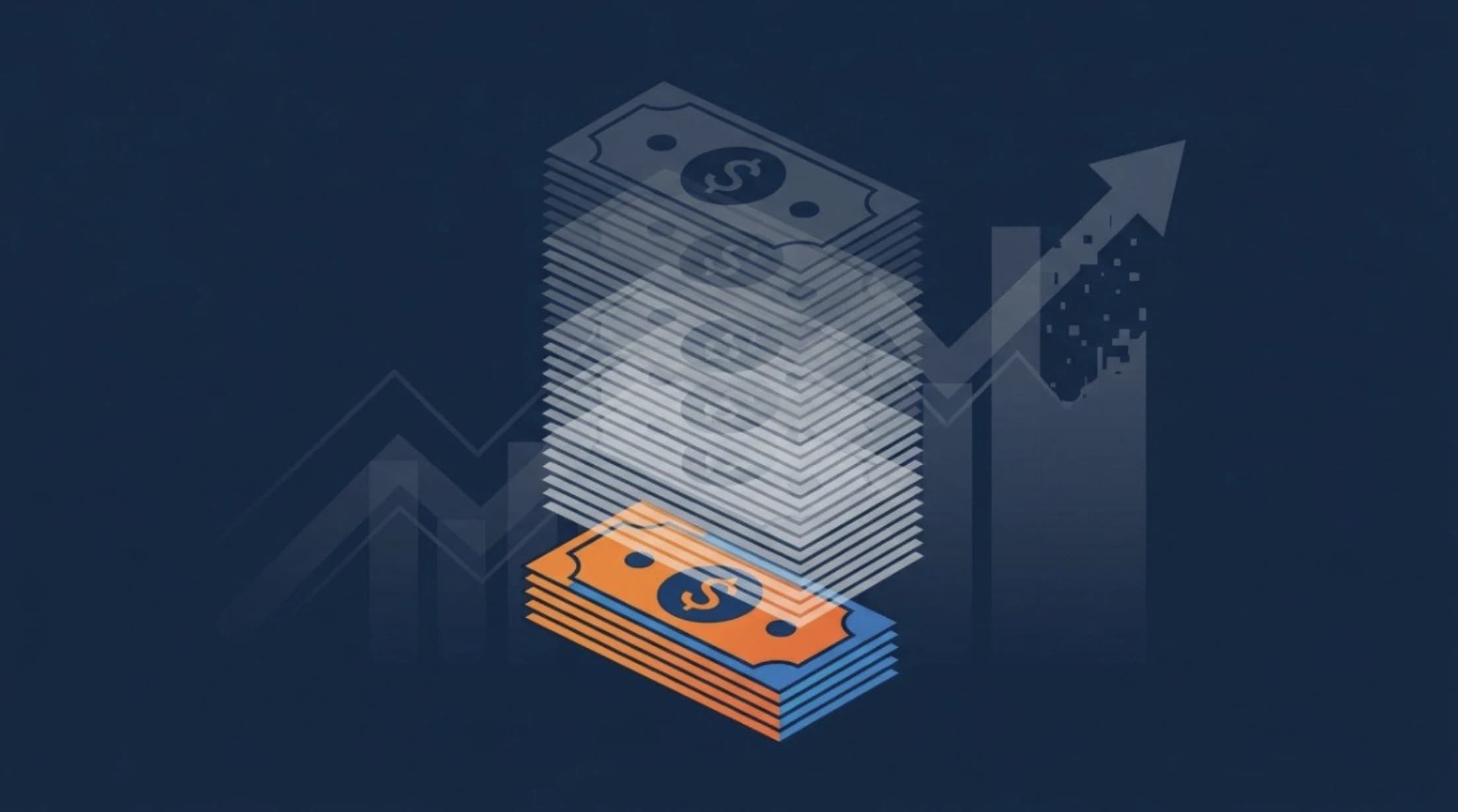
The Max Drawdown Delusion in Crypto Prop Trading
Ask a newly funded trader what size account they’re running and they’ll say “$100k” without blinking.
Wrong answer.
If that account carries a 5 percent max drawdown, the actual working capital is $5,000. The other $95,000 is scenery.
That gap between the number on the dashboard and the number that can actually kill you is the max drawdown delusion. It’s the single biggest reason funded traders fail inside the first month.
Account size tells you how much you can control. Drawdown tells you how long you get to keep controlling it. Only one of those numbers decides whether you survive.
Why Crypto Punishes This Mistake Harder
Plenty of forex traders blow prop accounts too. But crypto adds three problems that make drawdown discipline much harder to hold.
### Volatility That Ignores Your Plan
BTC can move 4 percent while you’re asleep. Alts can move 15 percent on a single headline. A stop that looked conservative on a 4H chart gets swept in ninety seconds during a liquidation cascade.
No Bell, No Circuit Breakers
Equities halt. Forex slows down on weekends. Crypto does neither: no forced pause, no cooling-off period, no moment where the market makes you stop and think. A bad Sunday night can end an account that took six weeks to earn.
Leverage That Compounds Small Errors
Most crypto prop programs hand you meaningful leverage, and the temptation is to size against the nominal balance. One wrong entry on a $5k real risk budget costs a third of the buffer in a single trade, and from there the job stops being about profit. It becomes about survival time.
The Math That Makes Losses Expensive
Losses and recoveries aren’t symmetrical, and this is where traders quietly get buried.
Drop 10 percent, you need 11.1 percent back. Drop 20 percent, 25 percent. Drop 33 percent, 50 percent. Drop 50 percent, 100 percent just to get flat again.
Overlay that on a prop account: burn 3 percent of a 5 percent limit and you’re not “60 percent through your buffer.” Every remaining trade has to work harder, with less room, under more pressure.
That’s when position sizes creep up, and when traders start revenge trading a market that never sleeps.
The math doesn’t cause the blowup. The psychological reaction to it does.
Static vs Dynamic Drawdown
Two firms can both advertise “5 percent max drawdown” and mean completely different products. Read the fine print before paying for a challenge.
Static Drawdown
Your floor is fixed to the starting balance: start at $100k with 5 percent, and the hard floor sits at $95,000 for good. Make $8k in profit and there’s now $13k of true breathing room; the buffer grows as you perform. This rewards traders who compound slowly.
Dynamic (Trailing) Drawdown
Your floor follows your equity high instead. Push the account to $108k and the floor climbs to $102,600. You’re up $8k on paper, but a normal pullback can still disqualify the account. In crypto, where a healthy strategy might see a 6 percent equity retracement in a week, trailing drawdown turns a good month into a failed one.
Worse are the versions that trail on unrealized equity rather than closed balance: a wick you never intended to hold through can breach the limit before you even exit.
The Question To Ask
Does the floor track closed balance or open equity? Does it stop trailing at breakeven? If a firm can’t answer that in one sentence, the answer isn’t in your favor.
Where Transparent Rules Actually Matter
The problem with most challenge providers isn’t that the rules are strict. Strict is fine. Strict is professional.
The problem is that the rules are arbitrary and vague, written so that failure is statistically likely.
Contrast that with a platform like Mubite’s crypto prop trading platform which runs on transparent risk parameters and direct market access rather than opaque trailing formulas and synthetic fills.
Knowing exactly where the floor sits, with orders hitting real liquidity, simplifies the job: trade the market instead of the rulebook.
Slippage on a real venue is a cost that can be modeled. A drawdown rule that can’t be reconstructed from a trade log can’t.
How To Actually Manage Your Drawdown
None of this matters if the risk model still keys off the headline number. Fix that first.
### Size Against the Limit, Not the Balance
Take the max drawdown in dollars. That’s the real account.
On a $100k program with a 5 percent limit, risking 1 percent of the drawdown means $50 per trade. Feels small. That’s the point: at $50 of risk, twenty trades can go wrong in a row and the account is still standing.
Build Your Own Circuit Breaker
The firm sets a daily loss limit. Set a tighter one and enforce it personally: two losing trades, or 2 percent of the drawdown buffer, whichever comes first. Then the platform closes, positions go flat, done for the session.
Crypto will still be there in eight hours. The funding might not be.
Know Your Strategy’s Natural Drawdown
Backtest it and pull the peak-to-trough number. A system that historically sees 8 percent equity declines paired with a 5 percent limit isn’t a challenge, it’s a coin flip.
Either cut size until the historical drawdown fits inside the rule, or find a program built for how the strategy actually trades.
Cut Size After New Equity Highs
This one’s specific to accounts with trailing drawdown, and almost nobody does it.
The moment a new high prints, the floor moves up and the buffer sits at its thinnest, which is exactly the wrong time to increase size and exactly when confidence says to. Halve the risk for the next few trades and let the buffer rebuild.
Treat Correlation As One Position
Long ETH, long SOL, long a couple of majors reads like four trades. In a risk-off flush, it behaves like one trade with four entry prices.
Add up the correlated exposure and count it against a single risk allocation, or one macro candle takes out the whole buffer at once.
Log Drawdown Before You Log Profit
Put max drawdown at the top of the journal, above P&L.
Traders who track profit chase it. Traders who track drawdown stay funded long enough for the profit to show up on its own.


Follow us on Google News
Get the latest crypto insights and updates.
Related Posts
How to Play Roulette Games With Crypto: Rules, Wallets, Bets and Safe Play Guideimage

Coinfomania News Room
Author

Bridging Two Worlds: How ZEN.COM Streamlines Digital and Traditional Capital Flows
Coinfomania News Room
Author

Crypto Casinos in Belgium: How They Work, and What the Law Says In 2026
Coinfomania News Room
Author