U.S. Treasury Executes $1.4B Debt Buyback- Total Hits $7.4B

U.S. Treasury redeems $1.4B in debt on August 26, 2025, bringing two-week total to $7.4B amid $35T national debt and liquidity efforts.
Quick Take
Summary is AI generated, newsroom reviewed.
U.S. Treasury redeemed $1.4B in debt on August 26, 2025.
Total buybacks reached $7.4B in two weeks amid $35T national debt.
Market reaction showed modest yield dip and risk-on sentiment.
Long-term fiscal sustainability remains a key concern.
A debt buyback of up to 1.4 billion was completed by the U.S. Treasury on an August 26, 2025, bringing the two-week total to 7.4 billion. This action is consistent with quarter-to-quarter refunding techniques, and it indicates the growing worry about liquidity control in the context of national debt that is over 35 trillion.
Operation Details and Scale
The redeeming on August 26 repurchased $1.4 billion worth of Treasury securities that have a maturity date between August 2025 and December 2030. An amount of 5.87 billion worth securities were received, which shows great participation of both the primary dealers and the institutional investors. This buyback, settled on August 27, is preceded by a two-week series of operations amounting to $7.4 billion, reflecting more aggressive debt management than it had been in earlier quarters.
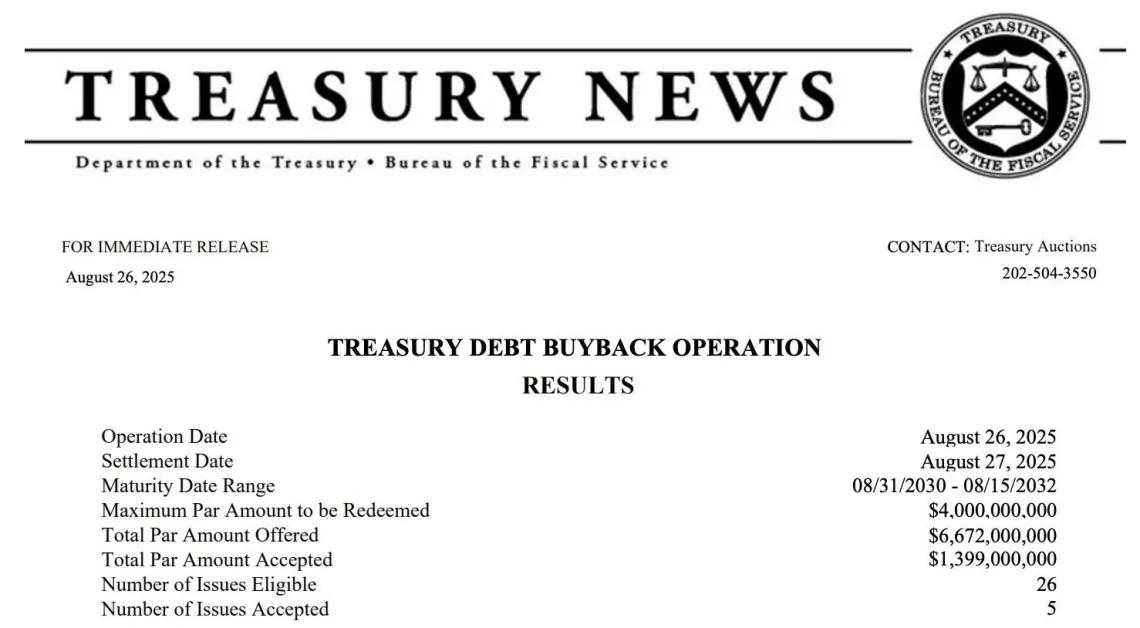
Image: X post by @rovercrc
National debt is today 35.1 trillion with a debt-to-GDP ratio of about 125. The buyback approach to liquidity injection is meant to stabilize markets, reduce borrowing rates and improve investor confidence. Treasury yields were fairly muted, with the 10-year yield falling to 4.2% following the announcement, and equity markets up 2.3 -Bitcoin gained 2.3%-an indication of risky asset preference following the increase in liquidity.
Historical Patterns and Fiscal Concerns
Although in the past buybacks were larger up to 210 billion during the early years of 2000s, the current rate is very high when compared to the last few years. Analysts caution that frequent buybacks would overstretch the borrowing capacity of the Treasury as interest payments are already well over $800 billion a year. The Penn Wharton Budget Model and IMF forecasts indicate that under the current fiscal path, the country might only have a span of 10-20 years before there is no way to pay back the debt with corrective action, therefore, the question arises on long-term debt management.
The tactical liquidity support as indicated by the buyback of 1.4 billion also underscores the size of the American fiscal problem. The long-term effects of increasing debt and increasing the rate of buyback activity were met with encouraging but guarded optimism in markets, but it is deserving of close monitoring in the next few quarters.


Follow us on Google News
Get the latest crypto insights and updates.