News · Últimas Notícias
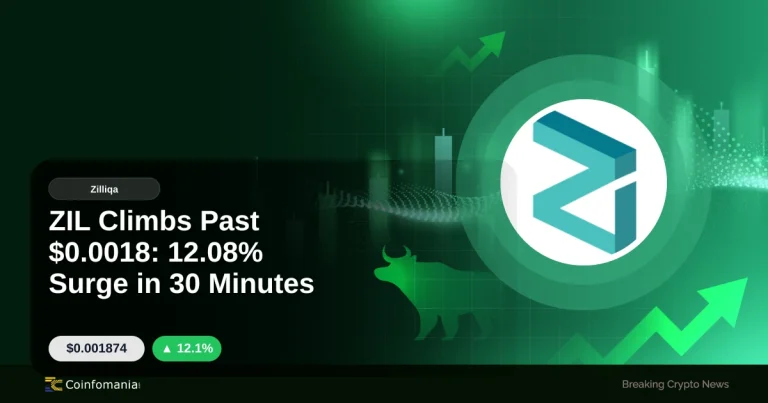
ZIL Climbs Past $0.0018: 12.08% Surge in 30 Minutes
Zilliqa's price surged 12.08% in just 30 minutes, reaching $0.001874 amid varied market activity.
· 2 Min
Zilliqa runs on special technology that makes it much quicker than many older blockchains. It can handle thousands of transactions every second without slowing down. The network works well for apps and businesses because it's both fast and affordable to use.
The ZIL token runs everything on Zilliqa - payments, apps, and network decisions. As more people use blockchain, Zilliqa's speed and low costs make it attractive for builders and companies who need efficient technology.
Zilliqa boosts speed by splitting its network into parallel shards that process transactions simultaneously. Users pay fees and run smart contracts with ZIL tokens, which are also used for staking.
The platform uses a special programming language called Scilla, designed to prevent smart contract vulnerabilities. With the upcoming Zilliqa 2.0 upgrade in 2025, the network will become even faster - confirming transactions in just 2 seconds while adding Ethereum compatibility and switching to energy-efficient staking.
Zilliqa focuses on scalable smart contracts, unlike Bitcoin’s store-of-value role or Solana’s high-speed transactions. It competes with Ethereum but offers faster, cheaper transactions via sharding. Compared to Cardano’s research-driven approach, Zilliqa prioritizes practical dApp deployment. Its niche in high-throughput blockchains sets it apart but limits its scope to DeFi and Web3 applications.
Zilliqa boosts speed by splitting its network into smaller groups of computers (shards) that work simultaneously. This parallel processing allows faster transactions compared to traditional blockchains. The platform uses Scilla - a special programming language built to prevent smart contract bugs and security risks.
The 2025 upgrade introduces customizable shards (x-shards) and compatibility with Ethereum apps. By switching to proof-of-stake, Zilliqa cuts energy use significantly while maintaining security. These improvements make the network both developer-friendly and environmentally sustainable for DeFi and dApp projects.
ZIL currently trades between 0.011−0.021 with a market rank of around #160. While still 95% below its all-time high, recent weeks show a 12% price recovery. Analysts predict 2025 prices could reach 0.09, with long−term estimates between 0.15-$0.50 by 2030.
However, ZIL is rewarding for patient investors who believe in its technology but require strong risk tolerance. The 2025 upgrade could be a turning point if adoption increases.
Zilliqa faces regulatory challenges in the U.S., where authorities may classify ZIL as a security token - potentially restricting some trading activities. Meanwhile, Europe's new MiCA regulations (fully active in 2025) provide clearer rules that benefit compliant tokens like ZIL, potentially boosting mainstream adoption.
These differing regional approaches create both obstacles and opportunities for Zilliqa's growth. While U.S. uncertainty persists, the EU's framework offers stability that could attract more institutional investors to the platform.
Global AML and KYC rules in places like Singapore affect exchange access. Users must stay updated on local laws to ensure compliance.
ZIL tokens work across multiple wallet types, offering flexibility for different needs:
Protecting ZIL tokens requires careful steps.
Zilliqa's network now supports 250+ applications, with major partners like Google Cloud. Here's how businesses and developers use it:
The upcoming Zilliqa 2.0 upgrade and growing Web3 demand are driving more projects to build on its fast, low-cost network.
Zilliqa 2.0's upgrade brings faster speeds and Ethereum compatibility, potentially boosting adoption. Analysts project 2025 prices between 0.01−0.09, possibly reaching 0.15−0.50 by 2030. Success hinges on real-world use, partnerships, and clear regulations.
Competition from Ethereum and Solana, plus market volatility, are risks. If execution succeeds, ZIL could reclaim its top-100 market position. Community support and innovation position Zilliqa as a DeFi and Web3 leader.
Zilliqa stands out with its fast, sharded blockchain that handles transactions quickly and cheaply. The platform supports growing DeFi projects and Web3 applications, with its upcoming 2.0 upgrade set to add even more features. While the technology shows promise, investors should be aware of crypto market swings, strong competition, and changing regulations. Zilliqa presents an interesting option, combining real-world use cases with ongoing technical improvements.
Zilliqa is a blockchain platform using sharding for fast, secure transactions. The ZIL token pays for fees, staking, and smart contracts. It supports DeFi, NFTs, and metaverse projects.
Zilliqa’s sharding splits transactions into smaller groups for parallel processing, boosting speed. Zilliqa 2.0’s 2-second block times further enhance performance. It handles thousands of transactions per second.
Zilliqa 2.0, launching in 2025, offers faster transactions, EVM support, and proof-of-stake. It enables customizable shards and Web3-focused dApps, strengthening its ecosystem. Users staking ZIL must restake post-launch.
Scilla is Zilliqa’s secure smart contract language, designed to prevent vulnerabilities. It ensures safe dApp development, enhancing trust in the platform.
ZIL's affordable price and upcoming upgrades draw investor interest, but market swings and strong competitors remain challenges. Experts predict prices between 0.01−0.09 for 2025, possibly reaching 0.15−0.50 by 2030 if adoption grows. Research and diversification are key.
MetaMask, Ledger, Trust Wallet, and Zillet support ZIL. Ledger offers offline security, while Zillet enables staking. Always use 2FA and secure backups.
ZIL is available on Binance, Coinbase, and OKEx. Users deposit fiat or crypto, trade ZIL pairs like ZIL/USDT, and store tokens in secure wallets. Stop-loss orders help manage risks.
U.S. SEC scrutiny may limit ZIL trading if classified as a security. The EU’s MiCA supports compliant tokens, aiding adoption. Local AML/KYC rules also apply.
Zilliqa uses sharding for faster, cheaper transactions, while Ethereum supports broader smart contracts. Zilliqa 2.0 adds EVM compatibility, bridging the gap. ZIL focuses on scalability for dApps.
Staking ZIL on the Zillion portal offers about 6% APY, rewarding users for securing the network. Earnings depend on staked amount and network participation. Users must restake after Zilliqa 2.0’s launch.
Zilliqa's price surged 12.08% in just 30 minutes, reaching $0.001874 amid varied market activity.
· 2 Min