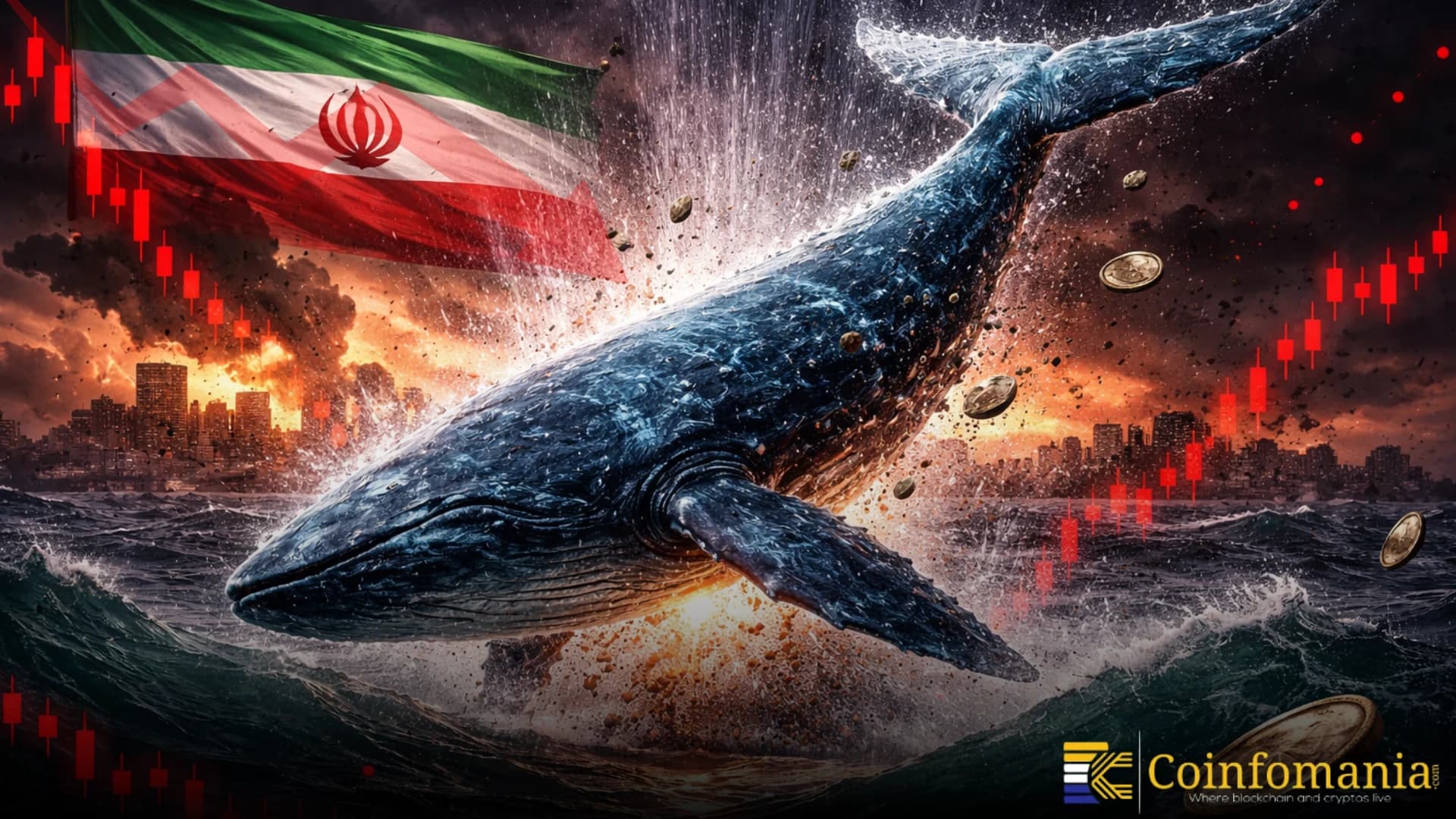
Whale Loses $650K Betting on Iran War Collapse

Polymarket whale loses over $650K after $1.5M Iran War, highlighting risks of high-stakes prediction market trading.
Quick Take
Summary is AI generated, newsroom reviewed.
Whale deposited $1.5 million USDC for betting
Bets focused on Iran-related geopolitical outcomes
Trader is currently down over $650,000
Declining probabilities reduced position value
A trader known as “Cinibengales” transferred approximately $1.5 million in USD Coin from Kraken to fund positions on Polymarket. The capital was used to place multiple bets on Iran war scenarios, including regime changes and potential military escalation.
This is truly a crazy whale!
— Lookonchain (@lookonchain) March 30, 2026
Cinibengales created a new wallet on March 6, withdrew 1.5M $USDC from #Kraken, and started placing war-related bets on #Polymarket.
He made large bets on events like "Iran regime fall" and "US forces enter Iran", and is now down over $650K.… pic.twitter.com/J7raEMNP52
Prediction markets operate by assigning probabilities to real-world outcomes, allowing users to speculate on events. In this case, the trader positioned heavily on outcomes that ultimately did not materialize. As probabilities declined, the value of those positions dropped sharply, resulting in reported losses exceeding $650,000.
Such trades are inherently high risk, as they depend on unpredictable external developments. Even well-funded positions can quickly lose value when market expectations shift.
Growing Popularity of Prediction Markets
Platforms like Polymarket have seen rapid growth, with increasing volumes tied to the Iran War. Significant capital has been allocated to markets focused on conflicts involving Iran, reflecting rising interest in event-based trading.
This trend highlights how blockchain-based platforms are expanding beyond traditional crypto trading. Prediction markets provide real-time insights into crowd sentiment, offering a different way to interpret global developments.
However, they also introduce volatility. Large trades by individual participants, often referred to as whales, can influence pricing and perceived probabilities. Outcomes remain dependent on real-world events like Iran War, which are inherently uncertain.
Iran War Risks and Implications for Traders
The recent loss underscores the risks associated with prediction market participation. Unlike traditional assets, these positions are often binary—if the expected event does not occur within a specific timeframe, the value can drop close to zero.
This creates an all-or-nothing dynamic, where timing and accuracy are critical. Similar cases have shown that even experienced traders can incur substantial losses due to incorrect assumptions or timing.
Market Concerns and Future Outlook
Prediction markets have also faced scrutiny regarding potential misuse and information asymmetry. Large, well-timed trades sometimes raise concerns about whether certain participants have access to better information. Despite these challenges based on Iran war, platforms like Polymarket continue to attract users. The combination of financial incentives and real-world event speculation is driving adoption. For now, this case highlights the importance of risk management. High-conviction bets can deliver significant returns, but they also carry the potential for equally substantial losses, especially when tied to unpredictable geopolitical outcomes.
References


Follow us on Google News
Get the latest crypto insights and updates.