News · Latest News
DripsNetwork Loses 24,882.99 DAI Due to Integer Conversion Flaw
DripsNetwork incurs a significant loss due to a coding flaw. Here's why this matters for the network's security.
· 2 Min
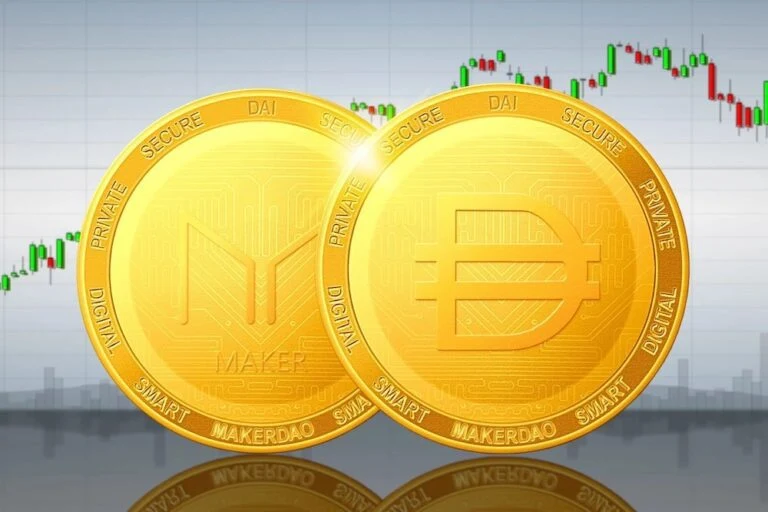
Dai functions as a decentralized stablecoin held on Ethereum with the goal to keep its market value fixed at $1. The Dai platform came online from MakerDAO in December 2017 through smart contracts that allow users to create Dai by collateralizing cryptocurrencies, especially Ethereum. Dai operates without a central authority because the MakerDAO community decides how to create tokens while ensuring public knowledge and strong stability. Dai maintains its value through DeFi applications like loans and interest because it helps stabilize crypto market volatility.
The Dai protocol runs on Ethereum under the MakerDAO decentralized autonomous organization. Users earn Dai by putting Ethereum-based assets, including ETH and USDC, into MakerDAO smart contract vaults. The system produces Dai tokens based on the worth of deposited collateral but expects users to put 150% to 200% of assets at risk. The system retrieves Dai holdings when the collateral value hits the minimum required outcome. Through MKR token holder governance, MakerDAO controls how much stability fee users need to pay while deciding what assets qualify as collateral to keep the Dai price stable at $1. The decentralized system creates clear operations and lowers the possibility of business partner failures.
The second aspect that differentiates Dai from other cryptocurrencies is that it has unique characteristics. Such as follow:
|
Cryptocurrency |
Consensus Mechanism |
Transaction Speed |
Average Fee |
Primary Use Case |
|
Bitcoin |
Proof-of-Work |
~7 TPS |
~$1-10 |
Store of Value |
|
Ethereum |
Proof-of-Stake |
~15-30 TPS |
~$0.5-20 |
Smart Contracts |
|
Dai |
Ethereum-based |
Ethereum-dependent |
~$0.5-20 |
Stablecoin, DeFi |
|
USDC |
Ethereum-based |
Ethereum-dependent |
~$0.5-20 |
Centralized Stablecoin |
While Dai is built upon Ethereum and dependent on its infrastructure, it is leveraged on Ethereum’s scalability; however, its decentralized nature places it as a more viable solution for trust-driven applications.
Ethereum's blockchain and smart contract technology is leveraged by Dai, with key components being:
The transparency is supported by the open source Maker Protocol that introduced Multi-Collateral Dai in 2019, adding flexibility as the collateral can be diverse (ETH and USDC).
Being worth $1 a more accurate description is that Dai is not really an investment for profit and capital appreciation, but an instrument for maintaining stability. Benefits include:
Smart contract vulnerabilities, as well as risks of collateral liquidation during market crashes and unclear regulatory environment, are included. Although not a speculative asset, the utility of Dai in DeFi and its stability are such that risk-averse crypto users want it. Volatile assets, like Bitcoin, should be treated as such, and investors should weigh opportunity costs.
Dai’s regulation landscape is changing, and by 2025, regulators will have:
Compliance with such regulations could further affect Dai’s usability and value stability, therefore users should monitor them according to their specific jurisdiction.
Dai is tradeable on large exchanges and decentralized platforms.
To mitigate those, always check the exchange platform's security and transfer Dai to your personal wallet post-purchase.
Dai is an ERC20 token and can be worked with Ethereum wallets.
Security practices include official software, 2FA, as well as generally avoiding scams, which include phishing. For large holdings, it is advised to use hardware wallets so as to minimize risk of hacking.
These steps reduce the risk of Dai being hacked, scammed or vulnerable to software failings, such as a library performing math incorrectly.
The adoption of Dai is driven by its stability, which brings it across sector:
The growth of Dai is centered around its integration with Ethereum’s ecosystem and has over $5.36 billion in circulation, which has fueled the usage in various applications.
DeFi and stablecoin demand are tied to Dai’s future.
Issues include Ethereum gas fees, regulatory complications, and potential smart contract risks. However, if Dai is able to navigate these challenges, it has a current price of $1, with a stable track record and is well-positioned to be a DeFi leader.
There is no Harmony without Dai, as it is one of the most groundbreaking stablecoins that is combining decentralisation with stability to become an important DeFi part. Its reliability is in the fact that it is pegged at $1, secured by crypto collateral, and is governed by MakerDAO. Dai is not a speculative investment, but with its utility being critical in lending, payments and hedging, crypto users are going to need it. Ethereum’s scalability, as well as regulatory shifts, will define its future, but Dai has a strong design and community for becoming a leader in stablecoin. If kept secure and generally up to date on the regulations, users will be allowed to maximise the benefits of using Dai for payments.
Dai is a decentralised money token on Ethereum which maintains value stability by tying with the U.S. dollar. Users create Dai through a smart contract platform that bonds Ethereum-based assets for collateral usage. Users receive Dai tokens when they lock crypto assets into the MakerDAO system, and they confirm ownership of significantly more assets than the Dai they issue. Token holders of Maker make decisions about stability fees and approved collateral.
Unlike other stablecoins, USDT and USDC are managed by centralised firms, since Dai operates on a decentralised system that depends on an overcollateralized community of MakerDAO developers. Dai relies on decentralised networks to protect its peg, which lowers the chance of failure from a single financial institution. The system maintains its value through automated contracts and market stability processes instead of requiring trust in company commitments.
Under normal conditions, Dai remains close to $,1 but due to market variables,its price may shift by minor amounts. Later, MakerDAO uses fees with collateral requirements and activates MKR creation or deletion to control Dai price stability. Deviations happen, but they usually last only a short time due to the automatic fixing effect of arbitrage opportunities bringing Dai back to its $1 base value.
To earn returns from Dai you can opt for lending it on DeFi platforms such as Compound, Aave, and Maker's DSR, where annual interest rates average between 2% and 10%. People use Dai because it provides stable financial gains despite market uncertainty. The profitability of Dai varies because it depends on the rewards given by the system and how often others need to borrow money.
Dai accepts funding through multiple Ethereum-based deposits such as ETH, WBTC, and USDC. Users provide collateral that matches 150% to 200% of the Dai they desire to create. To defend the pegged price MakerDAO will sell the collateral when its worth drops below a specific threshold. MakerDAO maintains an ongoing update of approved collateral assets voted on by their community members.
Dai functions as a safeguard asset that does not serve trading purposes. People use Dai mainly to handle uncertain market movements because it delivers steady income through specific transactions. Dai works well as a digital replacement for both cash savings and stable bank deposits when market prices decline. Dai exists to maintain stability instead of gaining value.
Dai buyers can acquire it from top trading exchanges, including Coinbase, Binance, Kraken, as well as decentralised exchanges like Uniswap. Direct Dai purchases into safe wallets such as MetaMask, Trust Wallet and Ledger or Trezor after making your transaction. Dai functions within any Ethereum-compatible wallet because it serves as an ERC-20 token.
Dai depends on both Ethereum blockchain security and MakerDAO's smart contract audit results. Users need to follow tools protecting their crypto wallets by steering clear of fake sites using two-factor authentication and shipping their private keys safely. The protocol withstands market cycles, but users need to monitor recent contract updates to protect their investments.
Dai faces possible smart contract problems and may need approval from its collateral or be exposed to regulatory changes in 2025. Dependence on the Ethereum network creates network congestion problems that cause high transaction fees to reduce its everyday functionality. Introducing some USDC as collateral increases centralisation vulnerabilities within the overall system structure.
People use Dai for financial services (DeFi loans and liquidity), payments with stable values, money transfers across borders and as a defensive tool during price swings. It works on platforms including Aave and Compound, while merchants in crypto-friendly areas let customers use it, and it helps run NFT trading spaces and blockchain game activities. People rely on Dai as their leading stablecoin option because of its secure and decentralised status in Ethereum's financial system.
DripsNetwork incurs a significant loss due to a coding flaw. Here's why this matters for the network's security.
· 2 Min