Bitcoin Marks 17 Years Since Satoshi Mined the Genesis Block

Bitcoin celebrates 17 years since Satoshi mined the Genesis Block on January 3, 2009, featuring the iconic message.
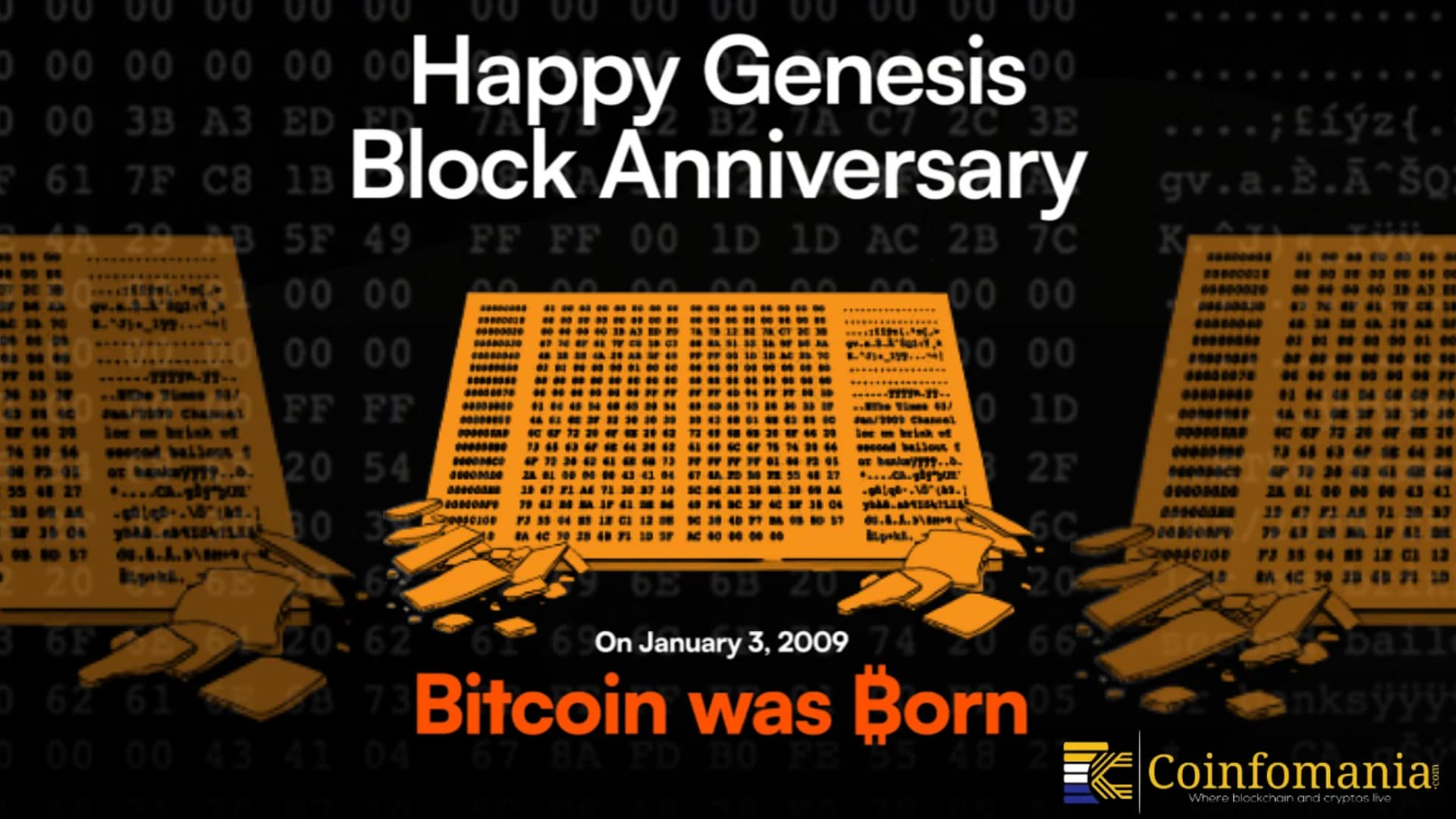
Quick Take
Summary is AI generated, newsroom reviewed.
Bitcoin marks 17 years of continuous decentralized network operation.
The Genesis Block’s 50 BTC remains permanently unspendable by code.
Bitcoin evolved from an experiment to a $90,000 institutional asset.
Over 17.5 million users are now KYC-verified on connected networks.
Bitcoin marked its 17th anniversary on January 3. It traces its origin back to the moment the genesis block was mined in 2009. Known as Block 0, this first block quietly introduced a new kind of money. This one is designed to function without central banks, governments or trusted intermediaries. Its creator, operating under the pseudonym Satoshi Nakamoto, embedded a short. But a powerful message in the block’s coinbase data.
The message quoted a The Times headline as “Chancellor on brink of second bailout for banks.” At the time, the global financial system was under intense strain. The message served as a timestamp and a clear statement of intent. That single block laid the foundation for Bitcoin’s defining principles. These included a fixed supply, transparent and predictable rules. With a security model enforced by cryptography and computing power rather than centralized authority.
A Reward That Could Never Be Spent
The genesis block carried a mining reward of 50 BTC. However, the way the developers coded the block prevents anyone from ever spending those coins. Early users found this detail confusing. But over time it became symbolic. The unspendable reward reinforced the idea that Bitcoin was not built to enrich its creator. Instead, it placed the system itself at the center.
🟠 Happy 17th ₿irthday, Bitcoin!⚡️ pic.twitter.com/MXgXuDDeRZ
— Capital B (@_ALCPB) January 3, 2026
From the very beginning, the protocol treated everyone equally. Including the person who launched it. Soon after, the network began producing new blocks at roughly ten-minute intervals. Miners joined voluntarily. Independent nodes verified transactions. Over time, this process formed a decentralized ledger that anyone could review. But no single entity could control.
From Experiment to Global Asset
What started as an obscure experiment discussed on cryptography. The forums have grown into a global financial network. By early 2026, Bitcoin’s market capitalization hovered near $1.7 trillion. This places it among the world’s largest assets. Bitcoin now trades on regulated exchanges and supports a wide range of financial products. U.S. spot Bitcoin ETFs have opened the door for institutional investors. While major asset managers now hold Bitcoin on behalf of clients. Bitcoin has also moved beyond markets and into policy discussions. El Salvador’s decision to adopt it as legal tender in 2021. Which marked the first national experiment with a decentralized digital currency.
Bitcoin at 17 Looks Ahead
As Bitcoin enters its 18th year, the market sits in a phase of consolidation. Currently, prices hover near $90K after periods of sharp gains and volatility. Meanwhile, analysts remain split on what 2026 will bring. For instance, some see continued upside driven by institutional demand. While others warn that corrections remain part of the cycle.
Despite shifting market sentiment. Bitcoin’s core system remains unchanged. Its supply schedule continues to tighten. The network operates without interruption. Developers, miners and users sustain it through open participation rather than centralized control. Seventeen years after the genesis block. Bitcoin stands as proof that a decentralized monetary network can endure. What began as a response to the financial crisis. It has evolved into a permanent fixture of the global financial landscape.
References


Follow us on Google News
Get the latest crypto insights and updates.